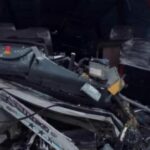

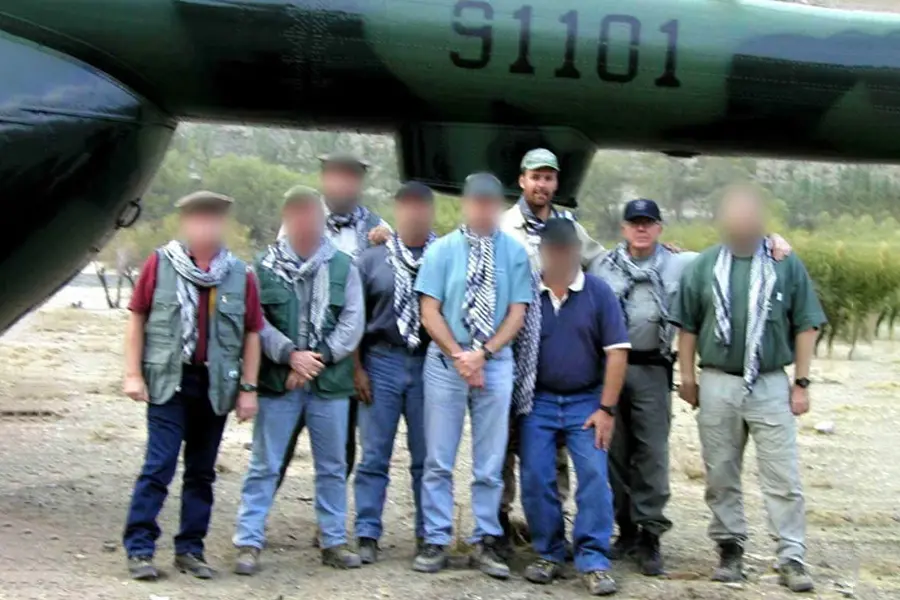
A Soviet-made helicopter that 25 years ago transported the first seven-member group of CIA officers to Afghanistan’s Panjshir Valley after the September 11 attacks has been restored and put on display at the agency’s headquarters in Virginia.
According to a CBS News report published on Saturday, September 26, 25 years ago, a Soviet-made Mi-17 helicopter transported seven CIA officers to the Panjshir Valley on September 26, 2001, just 15 days after the September 11 attacks.
The group, known by the code name “JAWBREAKER,” carried millions of dollars in cash, and its mission was to gather intelligence, prepare the ground for US operations against al-Qaeda and the Taliban, and strengthen relations with the Northern Alliance.
The helicopter was chosen for this mission because of its Russian origin; the Mi-17 was used at the time by both Northern Alliance and Taliban forces, allowing it to attract less attention in the region.
Rob Bair, a CIA historian, has said that this helicopter was one of the few helicopters capable of crossing the “Anjuman” pass at an altitude of about 14,500 feet.
Since the helicopter lacked an identification device to identify itself to American aircraft, its crew painted the words “USA” and the American flag on its upper section so it could be identified by friendly forces.
The helicopter had also received the call sign “9-11-01,” a name referring to the September 11 attacks.
David Tyson, a former CIA officer who entered Afghanistan weeks after the first group, has said that he flew in the same helicopter and, due to severe vibrations, loud noise, and fuel leaks, was worried about its airworthiness, but the pilots assured him that the helicopter was ready to fly.
This helicopter carried out more than 300 missions in Afghanistan in total and remained in service until 2012.
The CIA transferred this helicopter to its headquarters in Langley, Virginia, in 2018, and after years of exposure to weather conditions, it has been restored over the past year.
During the restoration, damaged parts were repaired, its paint was redone, and the number “607,” which belonged to the Afghan pilot of the first mission, was repainted on both sides of the helicopter.
During his mission in Afghanistan, Tyson also cooperated with forces under the command of Abdul Rashid Dostum.
He has said that American forces in the mountains traveled with “Afghan fighters” on horseback and sometimes rode for up to 14 hours a day.
On November 25, 2001, Tyson and Johnny Michael “Mike” Spann, another CIA officer, entered a fortress near Mazar-i-Sharif to identify the prisoners.
After the prisoners’ uprising, a clash began, and Spann was killed during this clash. At the age of 32, he was the first American killed in the Afghanistan war, and his name is the seventy-ninth star on the CIA memorial wall.
Tyson has said that after Spann was killed, he picked up his gun and used it until the end of his mission. This gun is now kept in the CIA museum.
Also, Tyson and Spann’s wife are active in the nonprofit organization “Badger Six”; an organization established in 2022 to help Afghan fighters who cooperated with “Alpha” team and their families.
This organization has announced that it now supports about 35 families, including in the areas of food, medicine, transportation, and resettlement.