
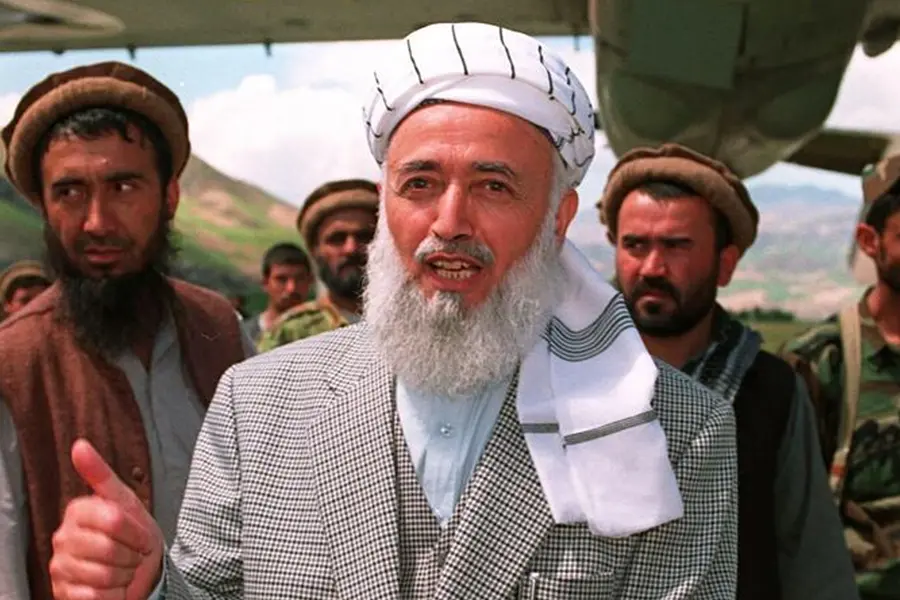
The Afghanistan Freedom Front, on the fifteenth anniversary of the assassination of Burhanuddin Rabbani, head of the High Peace Council in the previous government, has said that political power in Afghanistan should not be monopolized by any individual, group, ethnicity, or sect, and political differences should be resolved through law and public participation.
This front, late on Sunday, September 20 , by publishing a statement on the occasion of the fifteenth anniversary of Burhanuddin Rabbani, remembered him as a “moderate and reformist” political figure and highlighted his role in the political developments of Afghanistan over the past few decades.
The statement says that Rabbani, after the Bonn Agreement in 2001, peacefully transferred power to the interim administration and then continued his political activities within the framework of the new system and constitution.
The Freedom Front has stated that Rabbani, as head of the High Peace Council, despite a long history in war and resistance, was striving to find a political solution and end the war.
In another part of the statement, this front has held the Taliban responsible for Rabbani’s assassination and said that the attack on him, who at that time was working for dialogue and peace, damaged public trust and the peace process.
According to the statement, the Freedom Front has emphasized that honoring Rabbani becomes meaningful when his political life experience is used to build a future in which “political power is not the exclusive property of any individual, group, ethnicity, or sect” and no individual or group can use the name of peace to justify violence.
Burhanuddin Rabbani, former President of Afghanistan and head of the High Peace Council, lost his life on September 20, 2011, in Kabul in a suicide attack.