
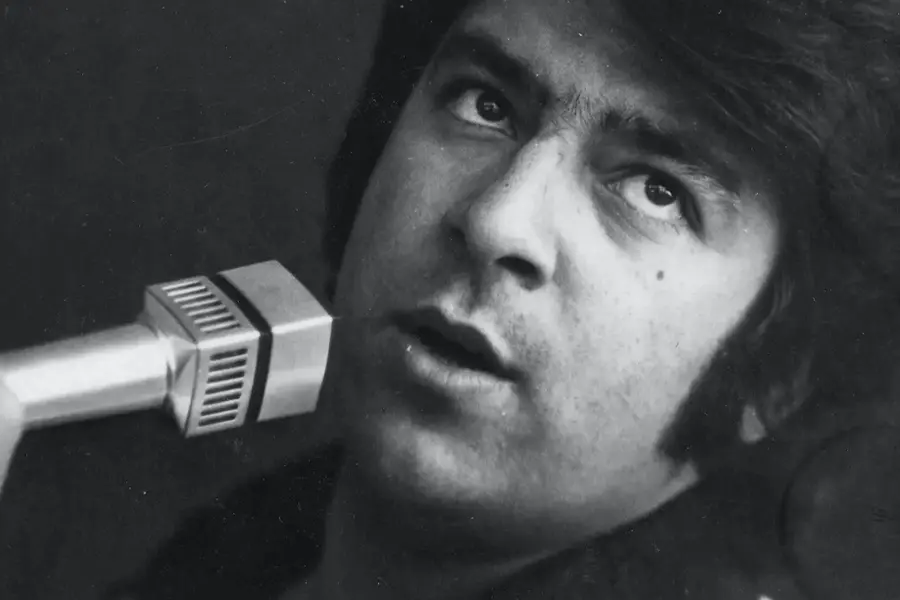
Forty-seven years have passed since the silencing of Ahmad Zaher’s voice, but why does an artist, after nearly half a century, still remain present in the collective memory of a society?
The answer is not limited to music alone; it lies in the deep connection between art, society, and the concept of love and freedom.
In Afghanistan’s cultural memory, Ahmad Zaher is not known merely as a romantic singer. He lived and worked during a time when Afghanistan was witnessing important political developments, including the formation of the republican system in 1973 under the leadership of Mohammad Daoud Khan.
In that same historical atmosphere, a number of his works and those of his contemporaries were also performed in the form of national and social anthems — works that include “Our Republic, Congratulations,” “Republic,” composed with the accompaniment of Ustad Mahwash, Mas-hoor Jamal, Sara Zaland, and Habib Sharif, and the song “Da Jumhuriyat Zamung” (This Is Our Republic).
These works reflected the political and social atmosphere of their time — an atmosphere in which “republic” was regarded not only as a political structure but as a sign of hope for the people’s participation in the fate of the country.
But Ahmad Zaher’s importance in the history of Afghan music is not limited to this part alone. What has made him enduring is his ability to transform individual feelings into a collective experience. Love in his voice is not merely a personal subject; it is the language for expressing the pain, hope, loneliness, and aspirations of a society. It is this very quality that has allowed his works to cross the boundaries of time and political systems.
Over the past decades, Afghanistan has experienced various political systems. Each era had a different understanding of the role of art and the artist; sometimes art was placed in the service of the state, sometimes it was restricted, and sometimes it was pushed to the margins. Yet what has not changed is the human need to freely express one’s feelings and thoughts.
In Ahmad Zaher’s song, the concept of “republic” is not merely a political structure; it also finds meaning at the cultural level — a society in which different voices are heard, art can be freely expressed, and the artist can reflect the feelings of the people without fear of restriction. From this perspective, Ahmad Zaher’s song can be defined not only as music but as part of the cultural memory of a society in search of freedom.
For many people, returning to Ahmad Zaher’s voice is not merely a review of the past; it is a kind of dialogue with the present. Songs like “Aasiam Digar” (I Am Rebellious Now) in the minds of some listeners today, beyond their original meaning, have become a symbol of weariness, silent protest, and the search for change. Ahmad Zaher’s art demonstrates art’s capacity for new interpretations in different times.
From this angle, Ahmad Zaher is not only an artist of love; he is also an artist of freedom. It is this very quality that has taken his works beyond a particular historical period and turned them into a living heritage.
The answer to whether Afghanistan today needs Ahmad Zaher’s art? Perhaps it can be sought within society itself — a society that, whenever it faces restriction, change, and crisis, needs more than ever voices that can express hope, pain, and humanity.
Ahmad Zaher is still alive after 47 years, because his voice was not only music; it was part of an unfinished conversation of a society with the concept of love, freedom, and equality — a conversation that has not yet ended.