
Nearly 100 Afghan civil society organizations, along with a number of international human rights bodies, have called on member states of the UN Human Rights Council to fully extend the mandate of the Council’s Special Rapporteur on Afghanistan.
In a letter published on Saturday, September 19, following the 63rd session of the Human Rights Council, these organizations emphasized that special monitoring of the human rights situation of Afghan women and girls must also continue.
The signatories of the letter also called for a specific report on the situation of marginalized ethnic, religious, and linguistic communities and groups in Afghanistan.
They also deemed it necessary to hold an interactive dialogue on the conditions of these groups.
In another part of the letter, the Human Rights Council was asked to launch the independent investigative mechanism on Afghanistan, established under Resolution 60/2 in October 2025, as soon as possible and to provide the necessary financial resources for its operation.
The signatory organizations say that five years after the Taliban’s return to power, human rights concerns in Afghanistan persist, and according to them, issues such as arbitrary detentions, enforced disappearances, torture and ill-treatment, pressure on journalists and human rights defenders, and the imposition of corporal punishment and executions are among the existing challenges.
Among the signatories of this letter are organizations including Amnesty International, Human Rights Watch, and the World Organization Against Torture.
A significant portion of the letter is dedicated to the situation of women and girls.
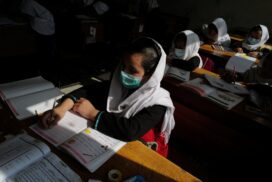
The signatory organizations say that girls remain deprived of secondary and university education, and women face extensive restrictions in employment, presence in public institutions, and participation in social life.
The letter also refers to a series of new decrees and laws in 2026 that, according to the signatories, have increased legal restrictions against women and girls.
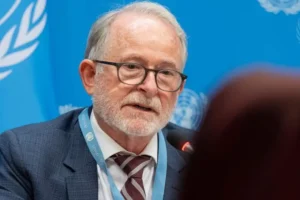
The UN Special Rapporteur on Afghanistan and a number of other UN experts had previously warned about the restrictions imposed on women and girls and used terms including “gender apartheid” — a term also cited in the recent letter by civil society organizations.
Alongside human rights issues, the signatories of the letter also expressed concern about the humanitarian and economic situation in Afghanistan and the increase in the return of Afghans from neighboring and other countries.
According to them, some of those returning to Afghanistan — including women, members of oppressed minorities, human rights defenders, and individuals who had ties with the former Afghan government or foreign forces — may face harassment, detention, or ill-treatment.
In another part of this appeal, the organizations’ concern about the increase in border clashes between the Taliban and Pakistan is raised.
They claim that airstrikes and shelling in border areas have led to the killing and wounding of civilians and damage to medical centers.
The signatory organizations have called on the parties involved to respect the principles of international humanitarian law and for independent investigations into allegations of violations of these principles.