
In a corner of the room, miles away from the events of your country, you cover them so that perhaps your relationship with your homeland, land, and people is not erased. You receive dozens of messages, statements, protests, and videos, but the capacity to address them is beyond your ability to cover them as needed. Dozens of women and girls across Afghanistan spend the fifteenth of August mourning their lost dreams and struggling for days they do not know how far or near they are. But on the other side, against these struggles that shine like light in darkness, some Afghan men in different countries laugh beneath protest posts. These comments under women’s protest posts make one’s body tremble. Is this what some call the honor and courage of Afghan men?!
Tanin’s work began with a team of at least ten people, but over time, due to the team’s dispersion across different countries and lack of resources, this capacity gradually decreased. However, three limited individuals still try to continue this path and, with their small share, bring the voice of the people from inside Afghanistan to the ears of the world — especially the voice of women, whose hope in these dark and gloomy days is a motivation for us to stand and build a brighter future. I, who am tasked with publishing content, every moment my motivation to continue the work diminishes, receiving a video protest from women revives it. I say to myself: “If women have trusted a few of your audience, show courage in dire conditions, and raise their voice, then if my lack of motivation causes Tanin to fall silent, I will have taken a share equal to anyone else in the black pages of history.” It is only this that makes us rise and continue.
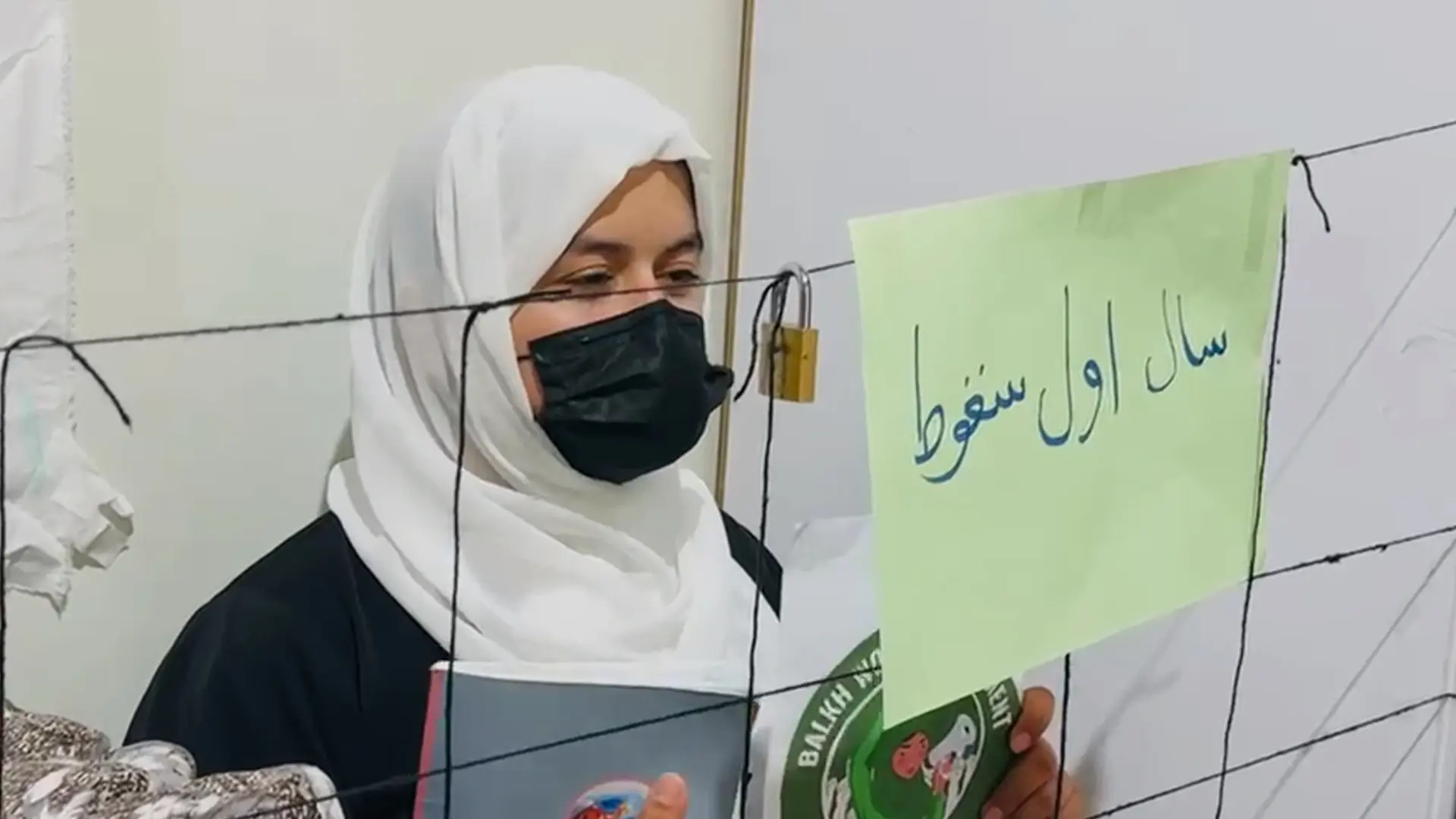
As the fifteenth of August approaches, we received dozens of videos and messages through various means. Some women have expressed their protest movements in the form of symbolic gestures that have attracted the most attention. But unfortunately, these methods of protest, more than receiving support, face mockery and humiliation from some Afghan men — whether in Europe or inside Afghanistan. The weight becomes heavier when women and girls are trapped behind the walls of homes. Some men laugh and amuse themselves with comments and mocking emojis.
This kind of mockery by men toward the mourning of Afghan women and their helplessness, trapped in darkness and the coercion of fate, stems from indifference to the pain and suffering of others and ultimately leads to emotional numbness. Where this emotional numbness originates and what its reasons are should be addressed by sociologists and psychologists. Why should Afghan men laugh at the mourning of women who have been harmed under the Taliban’s whip?
These mockeries, although insignificant in Tanin’s media compared to the small number of its audience, perhaps larger media can provide more narrative of this violence against women, as they more often encounter some insensitive individuals who take pleasure in others’ suffering by laughing at these protests under posts. Imagining this suffering and violence for women under the shadow of oppression, who seek light by fighting in darkness, is very heavy. Women who must endure the oppression of a structure simultaneously face violence from members of society. This denial of women’s suffering and oppression by some Afghan men puts an end to the entire concept of Afghan men’s honor.
In a society deprived of education and awareness of human rights and gender equality, and a ruling group that formalizes these deprivations, in such a society, behaviors of this kind appear somewhat natural. But for a woman who protests, these behaviors are never natural. The Afghan woman, who accepts the risk of death to stand against oppression, must pass through this as yet another suffering.
In the current situation, a person far from the homeland may not be able to prescribe a solution for this situation, but what is possible is to support this courage and resistance. What is possible is to strengthen these narratives, and what is possible is for the woman under oppression to know, despite all closed doors, that her voice is heard. The grand solution to this problem is that changes must occur in the social and cultural structures of society so that insensitivity and mockery of others’ suffering disappear. Although the distance to these changes is great, we must remain hopeful — equal to the hope of women who stand against suffering and oppression.