
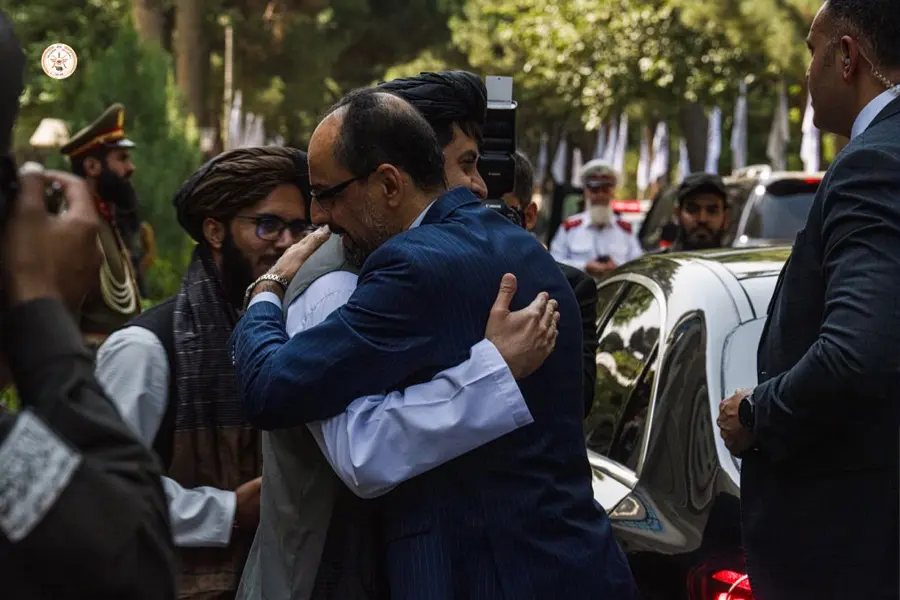
Hassan Khan, a Pakistani journalist and security affairs analyst, says the visit of the head of Turkish intelligence and the deputy of Qatar’s National Security Council to Afghanistan is part of growing concerns about the increasing number of Turkic and Arab fighters in Afghanistan and their joining Al-Qaeda and ISIS networks.
According to him, reports about the expansion of relations between Al-Qaeda and the Taliban have seriously worried Turkey and Arab countries. Recent reports have pointed to apparently close relations between Al-Qaeda and Taliban leadership and claimed that Al-Qaeda uses Afghanistan as a command and control center.
A senior Pakistani source told this Pakistani journalist that the visit of Turkish and Qatari officials and their subsequent meetings with Taliban leaders in Kabul and Kandahar has nothing to do with Pakistan or the strained relations between Islamabad and the Taliban.
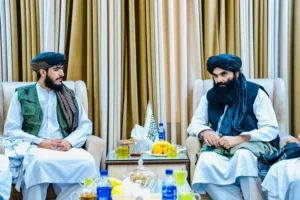
Ibrahim Kalin, head of Turkey’s National Intelligence Organization, and Hamad bin Khamis Al-Kubaisi, deputy of Qatar’s National Security Council, came to Kabul. Kalin met with Abdul Haq Wasiq, head of Taliban intelligence, Mullah Yaqoob, Minister of Defense, Sirajuddin Haqqani, Minister of Interior, and Mullah Abdul Ghani Baradar, economic deputy of the Taliban’s Prime Minister.
The topics announced in these meetings included security and intelligence cooperation, regional stability, counter-terrorism, human trafficking, and narcotics.
The delegation also went to Kandahar and held meetings with the circle close to Hibatullah Akhundzada. However, the main reasons for this trip and the full content of the Kandahar meetings have not yet been officially announced.
In other meetings, the topics of counter-terrorism, human trafficking, and narcotics were also raised.
This cooperation could be important for Turkey because, over the past few years, Turkish police have repeatedly announced the arrest of individuals on suspicion of membership or connection with ISIS in various Turkish cities. Afghanistan, after the withdrawal of foreign forces and the Taliban’s return, has become a scene of activity and competition for several armed groups, including Al-Qaeda and ISIS, and concern about cross-border networks remains one of the important security issues for regional countries.
Does the trip have a connection to Pakistan?
Meanwhile, a senior Pakistani source told this Pakistani journalist that the visit of Turkish and Qatari officials and their subsequent meetings with Taliban leaders in Kabul and Kandahar has nothing to do with Pakistan or the strained relations between Islamabad and Kabul.
This Pakistani official said: “If they ask the Taliban to distance themselves from the Tehrik-i-Taliban Pakistan (TTP), that is good; but if they ask the Taliban to enter negotiations, no.”
Hassan Khan says Taliban officials are pretending that the Turkish and Qatari delegations came to Kabul to discuss issues related to Pakistan and the Taliban.
Based on this analysis, the Taliban, by presenting such an interpretation, are trying to divert attention from the real motives of these officials’ trip — a motive that, according to Hassan Khan, is the transfer of Turkey’s and Arab countries’ concerns about the increasing number of Turkic and Arab fighters joining Al-Qaeda training centers in Afghanistan.
The Saudi-Houthi War
Another issue that can be considered in analyzing the trip of Qatari officials to Afghanistan is the intensification of the war between Saudi Arabia and Iran-backed Houthis.
The Taliban in the recent period have shown closer positions to Saudi Arabia, and the group’s Ministry of Foreign Affairs has condemned Houthi attacks on various occasions. In the latest case, the Taliban condemned the Houthi attack on a Saudi oil tanker and the alleged attack on the city of Mecca, emphasizing the importance of the security of maritime routes.
With the intensification of Houthi pressure in the Red Sea and Bab al-Mandab, this situation could affect the energy security of Saudi Arabia and other Gulf countries.
From this perspective, there is also the possibility that Qatar, in its talks with the Taliban, is seeking some kind of regional cooperation or coordination against Iran’s influence.
One of the hypotheses raised is that Qatar may ask the Taliban to cooperate in limiting Iran’s economic and trade routes through Afghanistan, so that Iran cannot in the long term make extensive use of the Afghan route to transfer goods to Afghanistan and Central Asian countries.
However, this issue is currently at the level of a possibility and analysis and cannot be presented as the definitive goal of the Qatari official’s trip.
Concern About the Increasing Presence of Foreign Fighters
Overall, the simultaneous trip of the head of Turkish intelligence and the deputy of Qatar’s National Security Council to Afghanistan takes place in circumstances where concerns about the presence and activity of jihadi groups and cross-border networks in Afghanistan have increased.
The presence of Turkic and Arab fighters and their joining Al-Qaeda and ISIS networks, along with reports about relations between the Taliban and Al-Qaeda, could be one of the topics of interest to Turkish and Arab security officials.
Also, the trip of these officials to Kandahar and their meeting with the circle close to Hibatullah Akhundzada shows that the talks were not limited only to the official Taliban structure in Kabul, and the center of power of this group in Kandahar has also been the focus of foreign delegations.