
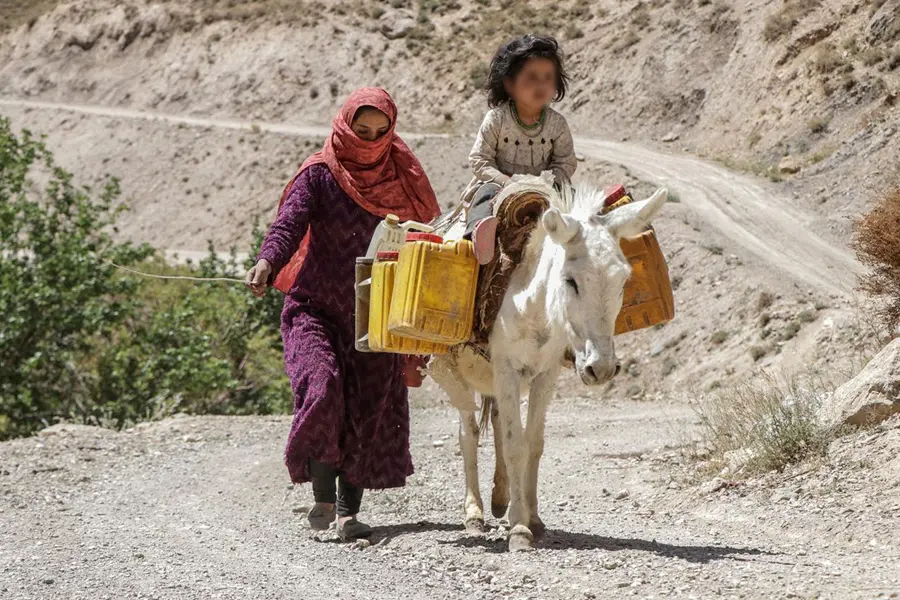
The PBS News Hour has warned in a report from Bamyan Province that prolonged drought, declining groundwater reserves and deepening poverty are putting the lives and livelihoods of millions of people across Afghanistan at serious risk, forcing some rural families to abandon their homes and agricultural land.
In a report published on Monday, November 23, by Leila Molana-Allen, Eric O’Connor and Zeba Warsi, PBS examined the worsening living conditions of residents in Bamyan, where repeated droughts over the past five years have left large areas of farmland dry and unproductive.
Yasin, a farmer in Bamyan, told PBS that his family had relied on agriculture for generations. However, over the past five years, they have lost parts of their farmland each year because of declining rainfall and water shortages. Only one plot remains.
Despite their efforts, the family harvested no crops this year. Yasin said that unless water reaches their land, they may have no choice but to leave the area.
According to the report, several of his neighbours have already moved to cities after losing their agricultural land.
Citing United Nations data, PBS reported that around half of the population in Yakawlang District of Bamyan had left their homes this year, while tens of thousands of people have also been displaced from other parts of the province.
The report further stated that more than half of Afghanistan’s provinces experienced severe drought over the past year, while the country’s groundwater reserves have declined by more than a quarter. Non-governmental organisations have warned that Afghanistan could run out of groundwater by 2030 if the current trend continues.
Women and Children Bear the Burden of the Crisis
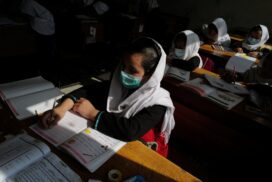
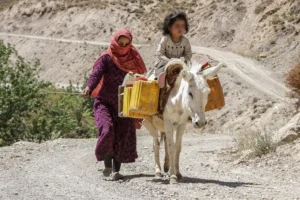
PBS also highlighted the growing hardships faced by women and children in Bamyan.
Mahgul, a woman farmer, said women in the region had traditionally worked alongside men in agriculture. However, shrinking employment opportunities for women have made it increasingly difficult for families to meet their basic needs.
She said the deteriorating economic situation, combined with a lack of income, had intensified family pressures and social difficulties.
Water Shortages and Rising Child Malnutrition
Citing United Nations figures, PBS reported that around 22 million people across Afghanistan currently require humanitarian assistance. Yet, by mid-2026, only 14 per cent of the $1.7 billion needed to fund the humanitarian response had been secured.
The report also stated that approximately 3.7 million children across the country are suffering from acute malnutrition amid widespread poverty and water shortages.
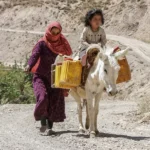
For many households, access to safe drinking water has become an increasingly heavy financial burden. Some families spend as much as 30 per cent of their income on purchasing clean water. The report put the average monthly income at around $200, while a single bottle of drinking water costs approximately $2.
As a result, many low-income families have been forced to rely on contaminated water from rivers and streams. Local residents told PBS that consuming such water has led to illnesses including diarrhoea, vomiting and eye infections.
Living in a Cave: A Family’s Struggle to Survive
The PBS report also documented the lives of an elderly couple, Mohammad and Gulchehra, who were forced to move into a natural cave in the mountains after losing their agricultural livelihood.
Struggling with poor health and extreme poverty, the couple now depend on the help of others even for their basic needs, including food and drinking water.
Gulchehra said their family was unable to support them financially, leaving the couple in conditions so desperate that, at times, they do not even have dry bread to eat.
She expressed deep concern about their future, saying that if one of them dies, the other will be left alone to face the harsh conditions.
The report concludes that drought, poverty, water scarcity and declining employment opportunities are placing growing pressure on vulnerable communities across Afghanistan, threatening their livelihoods and leaving the future of many families increasingly uncertain.