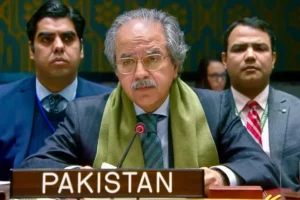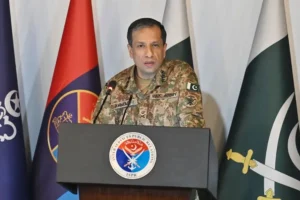


A spokesperson for Pakistan’s military says a significant number of terrorist groups are present in Afghanistan and are using the country’s territory to recruit, train and equip fighters and plan attacks against Pakistan.
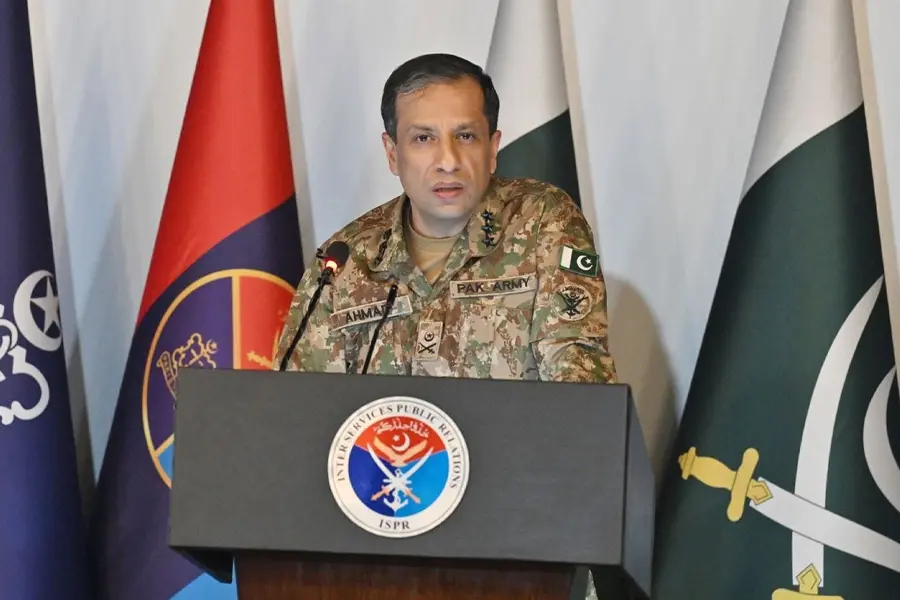
Ahmed Sharif Chaudhry, spokesperson for the Pakistan Army, said on Tuesday, 24 Sunbula, in an interview with Al Arabiya that Islamabad would continue taking necessary measures to protect its citizens against security threats.
He said decisions regarding Pakistan’s military targets and actions would ultimately be made within the framework of decisions taken by the country’s political leadership.
Referring to security relations between the two countries, he said Pakistan wants attacks organized from inside Afghanistan against Pakistan to stop.
Chaudhry said the Taliban control Afghanistan’s territory and that various armed groups are using the space to recruit, train and equip their forces.
The military spokesperson also referred to United Nations reports, saying that groups including al-Qaeda, ISIS-Khorasan, the Tehrik-e-Taliban Pakistan (TTP), the Balochistan Liberation Army (BLA), the East Turkestan Islamic Movement (ETIM), and the Islamic Movement of Uzbekistan (IMU) are active in Afghanistan.
He warned that Afghanistan should not once again become a place for the expansion of terrorist activities in the region and around the world.
Chaudhry referred to Article 51 of the United Nations Charter, concerning the right to self-defense, to justify possible actions by Pakistan.
He said the Pakistani government and armed forces consider themselves responsible for protecting the lives, property and security of the people and would also take necessary measures against attacks originating from outside the country’s borders.
According to the Pakistani military spokesperson, the country’s security forces have carried out more than 42,000 intelligence-based operations this year, during which more than 2,100 people described by Islamabad as “terrorists” have been killed.
In another part of his remarks, he rejected the Tehrik-e-Taliban Pakistan’s claim that it is waging “jihad” and a religious war, saying that the Pakistani government and people do not view the group’s actions as being related to religion.
Since the Taliban returned to power in Afghanistan in 1400, Islamabad has repeatedly blamed armed groups based in Afghanistan for attacks against Pakistan and has expressed particular concern over the activities of the Tehrik-e-Taliban Pakistan from Afghan territory.
In response, the presence and activities of armed groups in Afghanistan remain a contentious issue between the Taliban and Islamabad.