
Qatar has called for increased international support for least developed countries and warned that the simultaneous economic, climate, and food crises have exacerbated the structural challenges of these countries.
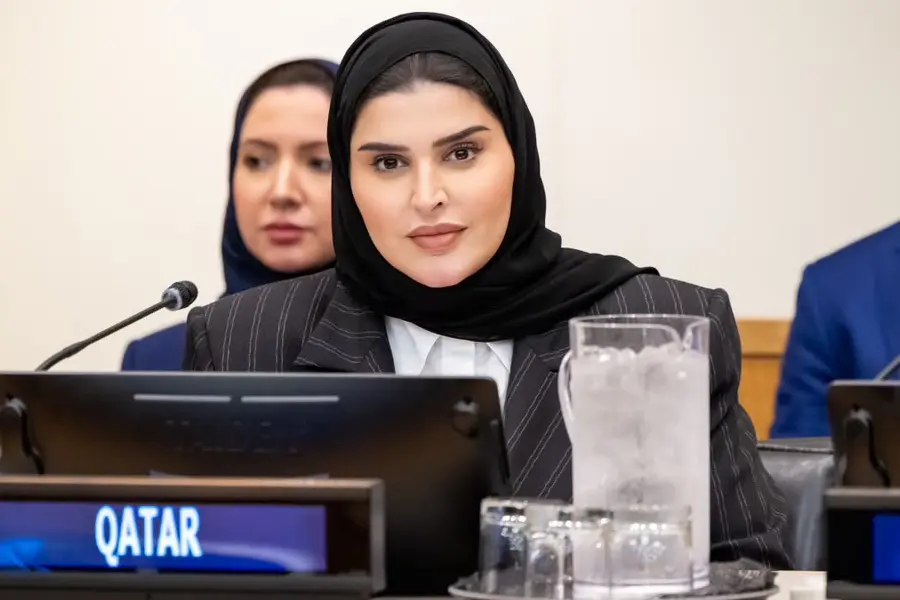
Maryam bint Ali Al Misnad, Qatar’s Minister of State for International Cooperation, made these remarks on Thursday, September 24, at the annual meeting of ministers of least developed countries on the sidelines of the 81st session of the United Nations General Assembly in New York.
She said that supporting least developed countries is not only a matter of international solidarity but also an investment in sustainable development, peace, and global stability.
Qatar’s Minister of State for International Cooperation emphasized her country’s commitment to supporting least developed countries and considered multilateral cooperation and the creation of effective partnerships important for achieving inclusive and sustainable development.
In 2023, Qatar hosted the Fifth United Nations Conference on Least Developed Countries in Doha.
At this conference, Tamim bin Hamad Al Thani, the Emir of Qatar, pledged $60 million for the implementation of the Doha Programme of Action, which includes $10 million for programme activities and $50 million for strengthening the resilience of least developed countries.
Al Misnad said that Qatar is creating practical partnerships to implement these commitments.
According to her, in September 2025, the Qatar Development Fund signed two agreements with a total value of $21 million with the United Nations Office of the High Representative for Least Developed Countries, Landlocked Developing Countries, and Small Island Developing States.
She also called for increased international cooperation to reduce the development financing gap, expand concessional financing, attract investment, and create financial mechanisms suited to the conditions of vulnerable countries.
Qatar’s Minister of State emphasized that strengthening resilience against economic, climate, and food crises and continuing investment in education, health, social protection, and skills development are essential.
She also warned about the consequences of the closure of the Strait of Hormuz and said that a prolonged disruption in shipping would affect not only energy security and global trade but also food security and energy supply, especially in developing countries.
Al Misnad expressed support for the return of shipping in this strait in accordance with international law and UN Security Council Resolution 2817 and said that Qatar’s priority is to prevent the escalation of tensions and provide the ground for diplomatic efforts.
In conclusion, Qatar’s Minister of State for International Cooperation emphasized that the success of the Doha Programme of Action is a shared responsibility, and development partners must allocate more resources and investment to least developed countries.