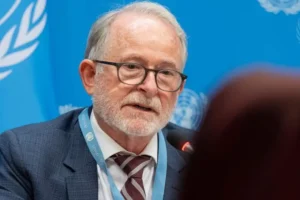

Abdul Qahar Balkhi, spokesman for the Taliban’s Ministry of Foreign Affairs, has called the attribution of the origin of 463 kilograms of methamphetamine seized in a joint US-Pakistan operation to Afghanistan “baseless and political.”
Balkhi said on Friday, September 25, in reaction to a statement by the US Embassy in Islamabad that the production, trafficking, and use of all types of narcotics in Afghanistan have been “absolutely” prohibited.
He added that Afghanistan under Taliban rule, after the narcotics ban, does not have the capacity to produce synthetic drugs either, and that for nearly a year, border crossings along the Durand Line have been completely closed to movement.
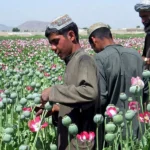
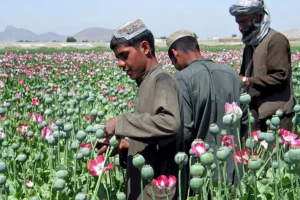
The spokesman for the Taliban’s Ministry of Foreign Affairs said that, in contrast, after the ban on cultivation and production of narcotics in Afghanistan under the group’s rule, the cultivation, production, and trafficking of these substances have increased on the other side of the Durand Line.
Balkhi has asked the US Embassy in Islamabad to look for the origin of the seized narcotics in the host country and not to use Afghanistan as a “propaganda tool.”
The US Embassy in Islamabad announced yesterday that the US Drug Enforcement Administration (DEA) and Pakistan’s anti-narcotics forces had discovered and seized approximately 463 kilograms of crystal methamphetamine worth nearly $21 million, which, according to the embassy, “originated in Afghanistan” and was en route to Sri Lanka.
According to the statement, this shipment was identified and seized on August 30, and several people were also arrested in connection with it.
Pakistan’s anti-narcotics forces, the US Drug Enforcement Administration, and Sri Lanka’s anti-narcotics police cooperated in this operation.
The US Embassy had said that Washington’s continued cooperation and training with Pakistan’s anti-narcotics forces help identify and prevent international narcotics trafficking networks.