
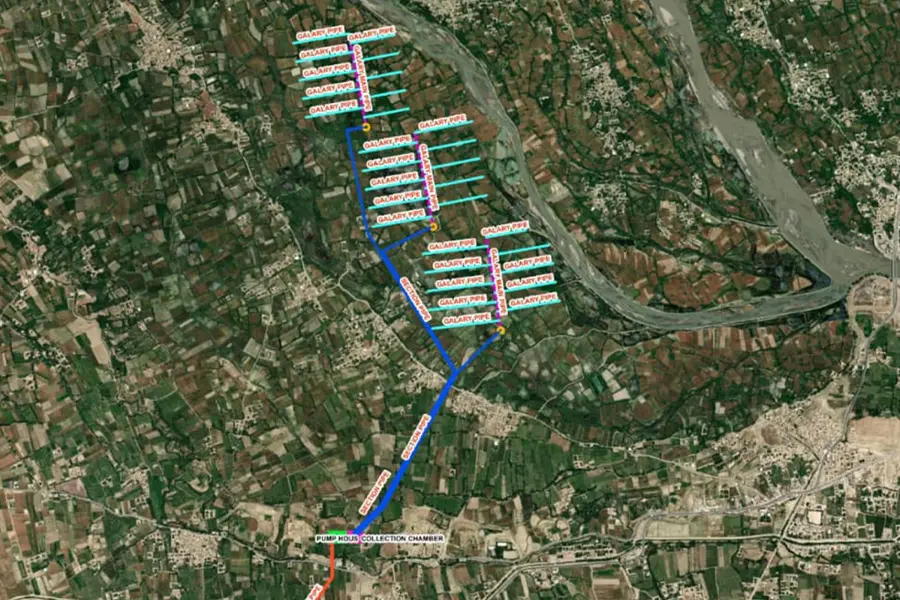
The Taliban Ministry of Urban Development and Housing has announced that it is reviewing a plan to transfer groundwater from the Sayyad area of Kapisa to New Kabul, saying the project is currently in the design and assessment phase.
The ministry announced on Wednesday, September 23, that groundwater in the Sayyad area, among four proposed sources, has been considered as one of the options to supply the water needed for New Kabul.
According to the ministry’s information, the Sayyad area is located near the confluence of the Panjshir and Ghorband rivers and south of the Ghorband River, and is about 55 kilometers away from New Kabul.
Studies conducted by the Japan International Cooperation Agency (JICA) in 2012 show that the daily water need per person in New Kabul is estimated at 150 liters.
Based on these studies, the total water need of New Kabul, including District 17 of Kabul and Sheikh Town, is estimated at about 7.34 cubic meters per second, or nearly 233.4 million cubic meters per year.
The Taliban Ministry of Urban Development added that the extraction capacity from the natural aquifers of the Sayyad area is estimated at about four cubic meters per second, equivalent to 126.144 million cubic meters per year.
However, according to JICA’s technical proposal, if an “infiltration gallery” system is used for water extraction, the capacity of this source could increase to about 6.3 cubic meters per second, or nearly 198.67 million cubic meters per year; a figure that covers about 85 percent of the projected annual need of New Kabul.
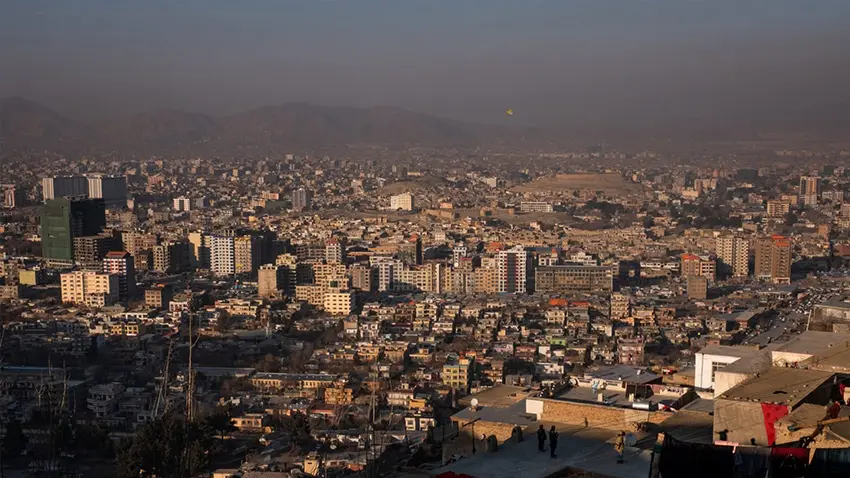
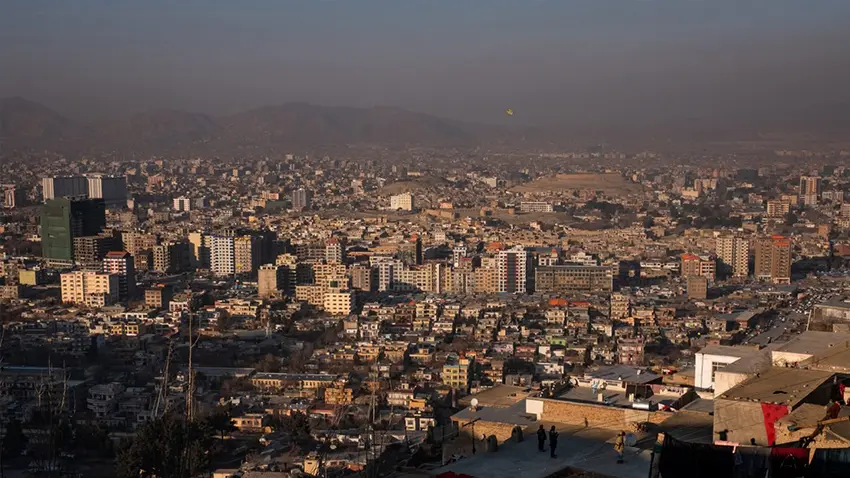
New Kabul is located in Deh Sabz, north of Kabul.
This project has been designed in four phases, and its first phase includes five sections.